The blinks of the day💢 Men towering the skies💦 We sow deep to make our hay💥 Beyond mouth, we’ve reach the height
The orange state💖 Never to hear we are lying in state Oh! Blessed be the heavens❣️ I hear them echoing, today is sacrosanct
A state of thirty three soils(LG) Our beautiful maidens carved out from these ointmental soils😍 Our food diet, the cravings of God’s angels to eat☺️ Exceptional language spoken✨ Oh!! Our ladies, the home makers
That above is our words of awakening At the very fragrance of the Kai Kai The dring ikpa isong The ressuration of honesty abounds
We are proudly 34 And we will continue in warmness The State carved out from her elder sister, Calabar Have you been to Akwa Ibom state? Come join the Orange State💃💃💃 Akwa abasi Ibom state The Land of Promise We speak the language of promiSE.
Justice Agatha Okeke of the Federal High Court, Uyo, Akwa Ibom State, has sentenced one Dr. Bassey Goddy Usen to 14 years imprisonment without an option of fine.
Usen, a medical doctor and managing director, Ceephass Diagnostic Clinic/Surgery was prosecuted by the Uyo Zonal Office of the Economic and Financial Crimes Commission, (EFCC), on a two-count charge of obtaining by false pretence to the tune of N5 million.
One of the charges read, “That you, Bassey Goddy Usen, the Managing Director of Ceephass Diagnostic Clinic/Surgery on or about the 18th April, 2017 in Uyo, within the jurisdiction of this honourable court with intent to defraud, obtained the sum of N2,000,000.00 (Two million naira) from one Edodiong Essien under the pretence that the money will be used to execute contracts awarded to you by Akwa Ibom State Hospital Management Board, Uyo; a pretence you knew to be false and thereby committed an offence contrary to Section 1 (1) (a) of the Advance Fee Fraud and Other Fraud Related Offences Act 2006 and punishable under Section 1 (3) of the same Act”. His “not guilty,” plea set the stage for his trial which commenced on October 24, 2018.
In the cause of the trial, prosecution counsel, Agbo S. Abuh presented four witnesses and tendered various exhibits which were admitted in evidence, and closed its case on February 28.
Delivering judgement on Monday, Justice Okeke noted that the prosecution proved its case beyond reasonable doubt and sentenced the defendant to seven years imprisonment on each of the two-count charges. Though there was no option of fine, the prison terms will run concurrently with effect from the day of his arrest. In addition, the convict would restitute the sum of N3 million to his victim as a condition for his release upon completion of his jail term.
Usen’s journey to prison began in 2018, when his victim, Edodiong Essien petitioned the EFCC, alleging that the convict approached him for a loan to enable him to execute a contract, purportedly awarded to him by Akwa Ibom State Hospitals Management Board for the supply of drugs to rural hospitals in the state.
While his claim for the loan is false, as the convict’s name did not feature as a contractor with the state’s Hospital Management Board, he flouted the terms of repayment, and furthermore, issued his victim with dud cheques.
Akwa Ibom State Government has given a nod to the state Covid-19 Incident Management Committee to continue in its aggressive community testing for coronavirus cases and immediate isolation and treatment of persons who have tested positive for the virus.
The state Commissioner for Information and Strategy, Comrade Ini Ememobong, made this known while fielding questions on News Day on ARISE TV in Uyo.
The commissioner stated that the state Governor, Mr. Udom Emmanuel, had directed that aggressive community testing for Covid-19 be carried out in the state as part of his administration’s efforts to curb further spread of the virus.
He stated that apart from the regular testing of those showing symptoms and those identified by contact tracing, it was necessary for the state government to intensify efforts in carrying out aggressive community testing in order to win the fight against the health pandemic.
The state Spokesman said that the approach was one of the adopted measures by the state government to further ensure that students in exit classes currently writing their mandatory examinations as well as those writing the ongoing Senior Schools Certificate Examinations, SSCE were given full protection from contracting the virus.
The commissioner further added that prior to the commencement of the examination, the state government had procured a large number of facemasks for distribution to secondary schools in the state which he said had long been given out to the students for their personal use.
He hinted that although a lot of students had been tested, only one sample was confirmed positive. He explained that the affected student was currently writing the examination from one of the isolation centres in the state with additional measures put in place to ensure that the integrity of the examination was not compromised.
Comrade Ememobong disclosed that the state IMC was currently visiting various communities in the state to carry out random testing to forestall community spread, especially among the people dwelling in the hinterlands.
Addressing questions raised on the amount so far expended on the fight against Covid-19 by the state government, Ememobong stated that Governor Emmanuel was a leader who upholds the principles of accountability and probity in all his financial dealings and would at the right time disclose a comprehensive expenditure details to the public. He allayed the fear that financial details would be withheld from the public domain.
He assured that the state government was working assiduously at flattening the coronavirus curve in the state by increasing contact tracing and arresting community spread of the disease. He added that no stone would be left unturned in making sure that the state wins the war against the Covid-19 pandemic.
Nigeria has been pursuing techno-economic development objective since the 1962/65 development plan with very limited success. This suggests that Nigeria’s development strategy may have ignored the progenitor of modern industrial evolution. Interestingly, insights from the early canons of economic thought unequivocally demonstrated that the capital goods sector is the most strategic factor behind industrialization in general and techno-economic development in particular. But unfortunately, contemporary development literature and policy is mute on the subject. It is argued that the absence of a dynamic local capital goods sector is the key reason behind Nigeria’s import and technological dependence, high rate of unemployment and underdevelopment broadly construed. The critical importance of the capital goods sector for industrialization and techno-economic development stems from the fact that it is the hub for technological innovation, technological entrepreneurship and technological learning-by-doing. Thus, the capital goods sector gives the economy the capacity to become innovative, to become reproductive in character, to create wealth at will, to generate employment and to effectively tackle the challenges of underdevelopment. The applicability of the capital good-led growth strategy is nevertheless contingent on three preconditions (availability of investment capital, availability of absorptive capacity and willingness to invest in capital goods) which Nigeria and other large developing countries can satisfy. Conventionally and theoretically increase in money supply according to the quantity theory of money triggers a high inflation rate in developed and emerging economies. The reality in Nigeria contravenes the quantity theory of money. This study investigates the missing link in Nigeria from January 2010 to December 2018 by applying the Johansen co-integration, Granger causality tests and Vector Error Correction Model (VECM) on the monthly data. The findings indicated that money supply does not cause inflation. Inflation is caused by non-monetary factors of political instability, corruption, poor basic infrastructure among others. Money supply and inflation co-integrate in the long-term. The causality test proposed a uni-directional flow from inflation to the money supply. Bi-directional causality was not observed in this study. The VECM resulT indicated that disequilibrium caused in the previous year can converge back to equilibrium in the current year. The general findings of the study disagreed with the quantity theory of money. The study recommends that non-monetary factors of political instability, corruption, poor basic infrastructure among others were responsible for the missing link. These factors should be checked and put in perspective to achieve lowinflation at a single digit in Nigeria.
This study used monthly time series data from the Central Bank of Nigeria‘s (CBN) Statistical Bulletin from January 2010 to December 2018 to explore the long and short-term relationship and causal link between money supply and inflation in Nigeria.
Implicit Price Deflator to GDP: measured inflation rate and is calculated as the GDP at the current basi prices divided by the GDP at the constant basic prices. The ratio explains and accounts for the change effects of inflation on the overall prices of products and services that make up the GDP.
Money Supply: M2 and M3 were used to investigate the dynamics of inflation. M3 included, M2, M1, M0 and liquid components of money supply that were not in circulation such as repurchase agreement and was the broadest measure of money supply in an economy. M2 consisted of all of M0 and M1 in addition to saving deposits and certificates of deposit.
Monetary Policy Rate (MPR): The minimum rediscounted rate (MRR) served as the CBN interest rate benchmark which anchors all other interest rates in the money market and the economy, influencing the cost of funds and its direction in the economy. Gross Domestic Product: measures the rate of economic growth.
THESE THE FACTORS HINDERING NIGERIA TECHNOLOGY
The Government does not value technology as much as they should. …
Nigerians do not understand or trust technology. …
The cost of running a technology company is too high. …
Some recommendations way are outlined here from the analysis of the various opinions in these topics.
DISCIPLINE
Late Professor Chinua Achebe had earlier asserted that the problem Nigeria suffers from is fundamentally the failure of leadership. He argued that the failure of leadership lay at the root of Nigeria’s problems. Another problem Nigeria suffers from however, is indiscipline. Nigeria is where she is today due to insincere leadership, corruption but most of all, Indiscipline. It is indiscipline that will prompt a police officer to receive bribe that will jeopardize national security as well as hamper the trust the people they swear to protect have on them. It is indiscipline that will make school teachers, lecturers to collect money in order to pass an unserious student. It is also indiscipline that will drive a decorated army officer to sell out his nation for a price. Indiscipline is the chief of all misconfigure of our national problem.
Discipline in the action and behavior of individuals and groups in the private and public sector will inadvertently root out bribery and corruption, bad leadership and several other problems facing our country Nigeria.
PERFUSE IN NOVEL INTELLIGENT
The rural areas in Nigeria accounts for a large percentage of the Nigerian population, however; some of these areas lack some essential social services and social amenities. One of such social services is fundamental basic education. This problem was addressed by the government through the creation of Government Schools around the country, burin most of these schools, the standards of teaching and learning are extremely poor. However, individuals and non – governmental organizations are at the forefront of the investment on innovative literacy. The Center of Development Support Initiative (CEDSI), a registered charity geared towards promoting good governance and sustainable development in rural communities has, over the past ten years, carried out development initiatives in over 500 communities. One of the unique efforts of CEDSI is the library ports literacy group. Each resource center is a one – stop center where young people can learn life – long skills. The centers have a music academy, library and bookshop. Young people are encouraged to develop skills in reading, writing and spelling as well as debate on civic issues. Investing in ideas such as these can help to radically stamp out illiteracy particularly in rural Nigeria, hence equipping the nation with the human resources for sustainable development.
ADVOCATING FOR JUSTICE AND EQUALITY
The Unity and Positive Change in a New Nigeria (UPCINN) is founded by lawyer Abby Ojo, it is dedicated to portraying Nigeria in a new light, promoting Nigerian culture and highlighting tourist attractions and showcasing new and ongoing development in the different states in the country. UPCINN believes that every citizen of a nation must contribute to the positive change of the country and be passionate about the good of the country, not just leave all the work to their government. In April, UPCINN worked with other well meaning organizations to organize a worldwide demonstration and campaign to recognize the constitutional (human) rights of the disabled and autistic people in Nigeria. Nigerians both at home and abroad are tired of the status quo and they are united in demanding more from Nigerian leaders through their democratic and constitutional rights as citizens.
AVOIDANCE OF BRIBERY AND CORRUPT PRACTICES
Bribery is something that has permeated the facet of the Nigerian social system. Most Nigerians have participated in facilitating it either directly or indirectly. Bribery is now a common phenomenon in the daily life of some Nigerians that it no longer seems evil. However, this problem needs to be stopped by a conscious mental and physical effort on the part of Nigerians, and not only those in positions of power and authority. Effective policies should be put in place to regulate the conduct of officers in the public sector to checkmate their activities in order ensure adequate service delivery in the public sector.
INVESTMENT IN ALTERNATE ECONOMIC SECTORS
Ever since the oil booms of the 1970’s, the focus of the national economy gradually shifted from agriculture into crude oil. The effect of this shift of economic priorities was a monopolization of the Nigerian economy by the oil sector and the neglect of other highly profitable sectors of the Nigerian economy. The agricultural sector, the tourism sector, the mining sector, the art and craft sector and many other sectors of the Nigerian economy have greatly suffered due to this neglect. However, if the administration focuses more attention into these sectors and properly invest in them, Nigeria could double its GDP and increase its export to other nations, therefore greatly participating in the global economy and increasing in human capital index, standard of living and other measures for globally assessing the overall standard of a nation. In conclusion, there are several other ways not mentioned here, of making Nigeria a better place; the reason for that is due to the fact that opinions vary regarding the ways and manners in which Nigeria could be made a better place. However, if the steps listed above are thoroughly implemented, Nigeria will witness a radical transformation in its political, economic and social institutions. As such, it will function better in harmony and equilibrium.
To put it very simply, grassroots mobilization is about getting individuals together to influence a specific outcome. Usually, this is political in nature.
The individuals concerned are locals, the community members, who are the most affected by the outcome they are trying to influence. They act together- in a march, or protest or even make calls to various parliament members to voice their support for a particular course of action.
There are two distinguishing features for every grassroots campaign:
It mobilizes masses (ordinary everyday citizens), to participate in politics: this could be to Get Out The Vote, or vote for a particular cause/campaign.
The communication directly speaks to every individual in the campaign: Door to door canvassing, SMS, phone-calls and emails are usually how every member is contacted. Mass communication tools like TV, radio, and Newspaper are not used.
Thus its main purpose is to encourage community members to contribute to their community by taking action and being responsible for their neighborhood. The medium of communication chosen helps personalize the cause to the individual and get them more involved in the movement.
How does grassroots mobilization work?
1. Collective action
Grassroots mobilization uses collective action (in the local level) to influence outcome in the national level. The ‘outcome’ is typically a cause or a change that the community wants. If the local political body is opposed to that outcome, then the community works together to get their voice heard and effect that change.
Case Study 1.Abahlali baseMjondolo
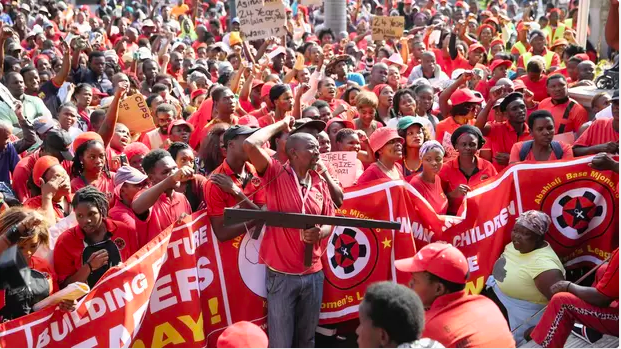
Abahlali baseMjondolo protesters marched to Durban City Hall Picture: Bongani Mbatha
In 2005, Durban in South Africa saw a major housing crisis. A small settlement, known as the Kennedy Roadshack Community was being forcefully relocated to other areas.
The outrage towards this unlawful removal led to the birth of Abahlali baseMjondolo – a grassroots community formed by the locals who still fight for housing rights.
The AbM developed organically from the road dwelling community and they campaign against any unlawful housing restrictions against the poor. They are the classic example of the locals taking up the mantle to strive for justice for themselves.
Currently, they are the most influential grassroots organizations in South Africa. They act as an organizational hub for other campaigns that aim to improve housing for the poor and economically backward.
2. Collective leadership
Another aspect of grassroots mobilization is that it is powered by collective leadership. Every single member in the community is equally invested and equally responsible in the cause. They all participate to the extent they can, to accomplish what they have set out to do.
Yes, there are a few administrative heads – like someone is responsible for communication, and there is usually a figure head for organizing the rallies. However, no single person in the movement is more important than someone else.
This power of equality that grassroots mobilization brings to politics and the community is instrumental in making every single member give his best and take ownership.
Case Study 2. Idle no more
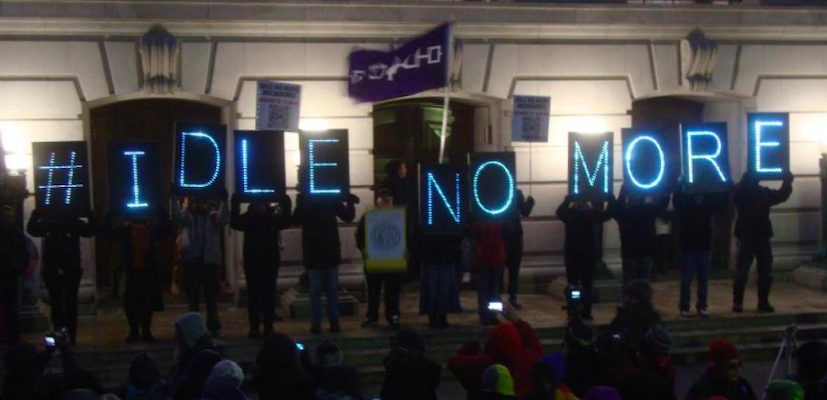
Aboriginal protesterswith #idlenomore
The Idle No More movement is the biggest and most impressive outpouring of aboriginal anger that Canada has ever seen. It started way back in 2013, to protest impending parliamentary bills that were thought to erode Indigenous sovereignty, collective rights, and environmental protections.
It was (and still is) comprised of a series of teach-ins and rallies throughout Saskatchewan. Any individual member can take up the mantle of organizing the teach-in. Or, they can volunteer to educate the community.
The highlight of the movement is how it mobilizes indigenous women to protest, raise their voice and be heard – with no single leader. Though it was founded by 3 indigenous women and one national ally, it is clearly an open forum that invites everybody to honor indigenous sovereignty and the land and water.
However, every single member is given equal ownership. The reason behind such collective ownership is twofold. The first is that the outcome of the protest if for the community (and does not benefit just a single member). So everybody is equally invested.
Secondly, every member is as affected by the parliamentary bills and the environmental laws as the next member. So for the betterment of the community as a whole, every member has to step up and take action – which means collective leadership is the best option.
3. Collective funds
All nonprofit organizations need funds. Grassroots communities are no different. They too need money to organize rallies, to educate the community, and also for everyday administrative costs.
When I say collective funds, I do not mean that every member in the grassroots community has access to the funds. I mean that every member in the community has the option of contributing to the cause.
Fundraising is typically done on a large scale – with many people contributing small sums to the cause. It is also done in terms of memberships.
The community members pay a sum to be part of the local grassroots campaign. This money is used for administrative costs (and other educative /fundraising drives). In return, the members get some benefits of belonging to the community (ready assistance if their home is relocated, free legal consult etc.).
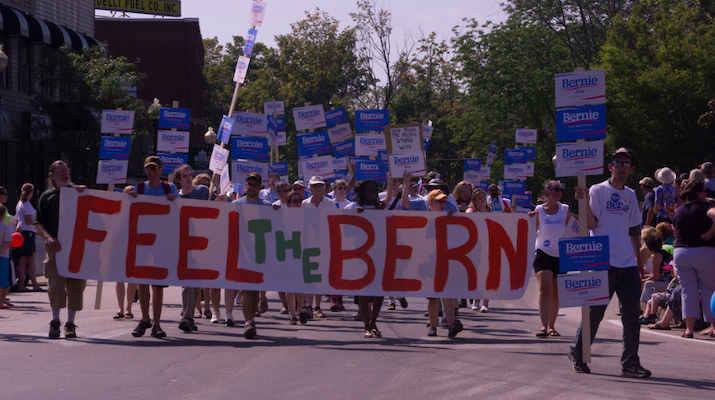
Case Study 3. Feel the Bern
The 2016 Bernie Sanders Presidential Campaign inspired a “grassroots army of volunteers and small time donors. Since Sanders was competing as an Independent, he needed all the financial assistance he could get.
This was especially true when he rejected money from Political Action Committees (PACs) – organizations that are usually mired in corruption and conspiracy.
He appealed to the working class Americans to fund his campaign. And they obliged! In what is seen as a massive grassroots movement, Sanders raised his campaign funds from the masses, one small online donation at a time.
Even though every donation was small, the number of donations pouring in was big, reaching at one point, a massive 5.2 million a day! That means he had effectively inspired grassroots supporters to financially support his cause!
How can you get started with Grassroots mobilization?
What I love about each of these success stories is how grassroots organization helped every day, ordinary people, like you and me, effect change.
It could be as simple as just giving a monetary contribution. Or, it could mean taking an educative session to the local community about the relocation options they have.
No matter how small, the efforts amount to a big change because of the scale in which it is done; Also because it is directly at the community level, where it can have most impact.
If you are inspired by this too and want to start your own grassroots movement, here are some pointers.
1. Identify the cause you want to address
Starting with the problem statement would seem just common-sense. However, I mentioned it because rarely is the problem statement and the root cause of the problem similar. Let me give you an example.
Say you want to clean the lakes in your city. The problem statement would mean “dirty lakes”. However the root cause of the problem is either effluents by industries, lack of legislation by the government, in efficiency of the Local Government to clean it up and so on.
So you would first do your research to narrow down which is the actual root cause you want to tackle. For instance, you would want industries to stop dumping their effluents in the lake.
Then your campaign strategy is two fold. On one hand you would protest outside the industry with your supporters to stop the dumping. On the other, you would try to get a legal bill passed that makes such dumping illegal (if it isn’t already).
Please note that this was just an example to highlight how nuanced a problem could actually be. What it would involve for you entirely depends upon the issue, how your community responds to it, and the local political climate.
2. Recruit supporters/volunteers
The next step in your grassroots campaign would be to create awareness about your campaign and get some interest from the community. Communication plays a key role here. Door to door canvassing and good old face to face talks help immensely.
However, to speed up the process, you also need to have a campaign website. It will act as a mascot for your message, and allow interested followers to register, and follow the events.
Your website also allows a valuable opportunity for you to build a list of supporters whom you can communicate via SMS and phone calls.
3. Partner with local organizations
At least in the initial stages, to gain some traction see if like minded organizations can lend you support. You could have a 2 minute presentation during their events, have your own campaign booth in their rallies and see if you can build your supporters and your message via that. The partners may be religious institutions, nonprofit organizations, universities, etc.
4. Take the help of community leaders
Either train them or collaborate with them to carry on your campaign message. Community leaders are the most influential within the community you choose. The changes you advocate, the measures you put forth will all be accepted easier if it also endorsed by a community leader.
This community leader need not necessarily be a part of your grassroots committee (though it is highly recommended that he is), but more like a consulting partner who is working with you toward the same goal. Religious leaders, local political office holder, the village figure head are all examples of community leaders who can help you.
5. Implement your plan of action
Conduct rallies, outdoor events, in-house focus groups, educative sessions – any group activity that you think is necessary to effect change. It could be organizing a group of volunteers to talk to the local representative. Or it could be staging a demonstration.
Regardless of which you choose, the key to successful implementation is communication. Broadcast SMS to your supporters with venue details to increase their participation. Use Peer to Peer SMS to talk to new contacts and see if they can come for the events you have planned.
Communicate with your volunteer team and organizers to see if everyone is on the same page. You will of course need the help of professional tools to make this work for you. Call Hub can help.
Similarly, to keep track of the various events, the volunteers and supporters, you may need a CRM (Civic Rm, that integrates with communication tool like CallHub).
6. Evaluate success
What is the outcome you are looking for? Do you already have guidelines to evaluate your campaign efforts? It could be as simple as getting 500 people to a rally, or getting a bill passed. Whichever metric defines you objectives, establish it right at the beginning and refer to it throughout the course of your campaign.
This will also tell you what you can do to improve your campaign next time. For instance, even if 500 people turned up for a rally and you were not able to get the momentum you need, then the goal for the next event would be modified. It would be to get 1000 member sign ups at the rally. So regardless of how many people turn up, if you get the defined sign ups, your campaign momentum will be up!
Best practices for grassroots mobilization
To enlist grassroots supporters you need to inspire citizens through several initiatives, events, and campaigns. Make them understand that the cause is worthy of their wholehearted support. People respond to sincere appeals, so persuade them with reason.
Education is the backbone of any grassroots campaign as people don’t participate in anything they don’t understand.
Once inspired, give your grassroots activists meaningful tasks to do. For example, if your goal is to get citizens to engage with reps, then detail out specific actions to be taken and give each person a meaningful task to do. Some volunteers can give voters the latest information, others can tell them what questions to be asked, how phone calls are to be made, and how individuals can effect change in politics.
Personalize all communication through phone calls, text messages, in-person contact, patch-through calls, direct mail, and emails.
You must keep your activists, volunteers, and staff motivated and help them if they cannot achieve the set goal.
Don’t just raise an issue, tell a story. People must be able to emotionally connect with your campaign so you need to make a human connection through storytelling.
You must trust grassroots activists to take initiative. If you want to mobilize grassroots you must nurture an attitude of freedom and creativity.
Harness momentum by funnelling supporter engagement into clear advocacy action, both online and offline.
Strategies for grassroots mobilization
Host House Parties Or Meetings
An easy way to mobilize people is to host a party or meeting at a community member’s house. Informal gatherings like these offer a great way for community members and campaigners to get to know each other and discusses the finer points around the issue. People who might be close-mouthed during routine campaign outreach are more open to sharing their concerns in such settings. These get-togethers also increase the probability of people signing up as volunteers in the future.
Engage With People Both Online & Offline
Social media platforms offer plenty of channels for you to engage community members. While these platforms help you reach out to mass audiences they aren’t always effective in engaging them on a personal level. So you need to balance your online interactions with offline activities. These activities can include phone calls from volunteers, personal text messages, door-to-door visits, town halls meetings, setting up information tables in high-traffic areas etc.
Hold Successful Town Hall Meetings
Town hall meetings give your organization or party a chance to meet the community in person and answer their questions. It is also an important part of your grassroots campaign. Therefore, you need to make sure that your candidate is well prepared for the meeting. Since such an event gives you an opportunity to reach out to new supporters make sure you have a registration table or a text-based registration process (eg. Text CHANGE to 52322 for updates!) to keep a track of those who come to the meeting.
Use Social Networks For Grassroots Mobilization
You can use social media to enhance your campaign awareness and build relationships with your audience. These networks help you deliver real feedback to strengthen your message. For example, The Tea Party movement is a good example of grassroots growth. It was a community-based initiative that made use of digital media such as Facebook to coordinate protest events and to rally support for the cause. On Facebook, a page was created to share campaign literature and to start conversations around sensitive issues.
Hashtags are another way to influence and organize people. Use hashtags to group together postings from across the network under a unifying message. Some grassroots movements which used hashtags to organize and advocate people on a large scale on social media are Black Lives Matter, Love Wins, Resist, etc. These tags show how something that starts as a media campaign takes footing to embody a social movement. The ‘#resist’ hashtag was even used by event planning sites like Meetup.com to bring together members of a community that want to get involved politically. Resist: Dallas is one such example.
Grassroots mobilization helps political campaigns, advocacy groups, and nonprofits encourage political conversation and effect change at a local or national level. It gives you an opportunity to make a lasting impression on communities by constantly engaging with them through conversations that matter to them. The key is to develop a message that works, test it on different mediums, and enlist community leaders to spread your message. Keep these tips and strategies in mind for your grassroots mobilization efforts
Your-Turn
If you have ever dreamed of changing the world, then you know how powerful grassroots mobilization can be to it. However remember that running/launching a grassroots campaign is a tedious and all-consuming effort.
It is not as easy as it sounds and needs huge investment of time and effort before your cause even bears a semblance of coming to fruition. You can always sign up at your local grassroots community to help – it will give you an idea of what exactly running a grassroots campaign entails. Good luck!
A socio-cultural organisation of the Fulani ethnic group, Miyetti Allah, Kautel Horeh, has said that If Nigeria Breaks up Today, It won’t affect them.
Speaking through its National President, Abdullahi Bodejo, in an interview with the Sun, He that said he is so afraid the way regions are coming up with illegal security outfits, “One group calls its own, Amotekun; another group calls its own Shege ka fasa”, declaring that he does not support anything illegal.
“if the Fulani should set up its own, how many countries will that be; how many countries do they not have brothers- Our brothers are in Cameroun, Niger, Chad, Mali etc. Some migrated to Ghana to rear their cows and other parts of the world.”
He said his organization is looking at the response of the government and security agencies to the formation of these “illegal security outfits”, because if it comes to our side. I don’t think it is something that anybody can control.”
“If we are pushed to set up our own security outfit, nobody can control it because nobody knows how many Fulani in Nigeria; we are more than every tribe in this country, we are in every corner,” Bodejo warned.
“If anything happens to this country whether break up, nothing can affect the Fulani. Nothing can affect the Fulani,” he added.
He said, however, that Fulani is blessed people who are managing themselves, but are hated by Nigerians “who do not want to take their eyes off them.”
To construct St Finbars, Jagunmolu, Diya and Soluyi street.
Governor Babajide Sanwoolu on Friday, commissioned a state-of-the-art CMS Primary Health Centre built by the administration of Hon Kolade Alabi , the chairman of Bariga local council..
The commissioned CMS Primary Health Centre completed with maternity wards, consulting rooms, accident and emergency , doctor’s quarters, laboratory , standby ambulance , security patrol van , pharmacy as well as X ray machine alongside three blocks of classrooms , 24 toilets, school hall , Thomas drive , Famosa Lane, Ademolu street , Egberongbe street , Olusegun lane, Jolaosho, Adeyinka Osijo and network of 5 roads of Ewenla, Adetoke, Omobokun, Emmanuel Church street constructed at Apelehin area of Bariga , free public school ride( one more to be purchased in a month’s time ) , buses for CAN, Traditional Chiefs, Market men/ women, and two staff buses were the other milestone projects completed by Hon Kolade Alabi.
Earlier before the arrival of the governor , the Commissoner for Local Gorvement and Community Affairs, Dr Wale Hamed and Senator Anthony Adefuye commissioned the bus acquired for the Christian Association of Nigeria ( Bariga chapter), Market men/ women and the Bariga traditional chiefs.
The Governor , Mr Babajide Sanwoolu, alongside his deputy Dr Obafemi Hamzat, Mr Muri Okunola (HOS), Dr Wale Hamed ( commissioner for local govt and community affairs ) Special Adviser works , and other state executives and officials were welcomed amidst cheers from thousands of Bariga residents scattered across Ilaje Area where the Primary Health Centre was located.
He and his team were welcomed by the host chairman, Hon Alabi, his Vice, Hon Adeola Kuponiyi, Bariga legislators, excos , Mr Olufemi Ogundeko( CM) and other management staff , Hon Rotimi Abiru( LAHA member Somolu 2) , Hon Rotimi Olowo ( LAHA member Somolu 1), Hon Ademorin Kuye ( Reps member Somolu ) , Senator Anthony Adefuye, Hon Sesan Olanrewaju, Hon Wole Diya , Hon Wale Mogaji, Somolu Bariga Apex leaders , Revd Timothy Oyasodun , Hon Gbolahan Bagostowe, ward chairmen ( somolu and Bariga), other party leaders, youths and women, after which he was taken round the health centre for the commissioning.
He was afterward taken to Gbagada Girls Junior High School , where he also commissioned 3 blocks of fully furnished classrooms, 24 modern toilets, a hall and a recreation Arena. The students trooped out of their classes with the chanting of the governor’s name, raising white flags with Lagos state logo and also honoured him with cultural display
“The governor in his words said “We are very grateful to Alabi on the good works he is doing in Bariga especially in the area of health care and education, and the children will surely get quality education and brighter future with this educational facilities”
The last point of call for the governor was the network of roads constructed at Apelehin, the ward F area of Bariga , the five newly constructed roads are Adetoke street, Omobokun street, Ewenla street , Community street and Emmanuel Church street. Before the advent of this administration the area was been referred to as mosquito village , this was due to the level of decadence associated with the area, but now referred to as Transformation city after his intervention.
Speaking at the Ewenla end of the road, Hon Alabi said he decided to bring succor to the people of the area after his ward tour on assumption of office.
The council chief eulogizing the governor said the 21 roads in which 18 has been delivered so far by the administration, was to complement the 11 roads under construction and nearing completion by the administration of Mr Sanwo-Olu.
The council boss said Governor Sanwo-Olu facilitated the completion of the inaugurated roads, noting that the Governor, after listening to the council’s complaint, immediately mobilised contractors handling the projects back on the sites.
“Bariga LCDA has been benefiting from the magnanimity of Governor Sanwo-Olu. I recall his efforts towards the completion of some roads that has been abandoned in Bariga by the State, I made a complaint to him about the neglect of the roads and he immediately approved that the contractors should return to sites to ensure the projects are completed, and they are nearing 80 percent now
Alabi said the usefulness of the projects to the people demonstrated the capacity of the council to transform development programmes in the grassroots..
The Governor while addressing the mammoth crowds present at Ewenla, said Alabi has demonstrated a good leadership qualities , as this was the first local government he will visit and made full tour and he was indeed happy with what he saw.
“Hon. Kolade intervened in education sector with the building of three modern classroom blocks in Gbagada Girls Junior Secondary School, build 24 toilets, hall and donated buses to carry the pupils free of charge. He also intervened in infrastructure, given all the roads he has built for the people of Bariga. This is a real transformation of a local government and I will use this good example in Bariga council as a point of contact to other local council chairmen.” says the governor .
As a reward for the quality of projects delivered, and it will also serve as his valentine gift to the people of Bariga , Sanwo-Olu promised to appoint a Special Adviser from Bariga Local Council to support the State Government’s effort in driving more development at the grassroots. He charged other council chairmen to emulate the example set by the Bariga council boss, saying their social programmes and capital projects must address the welfare of their residents
”As a Government, the quality of projects we have inaugurated today demonstrate our commitment to lifting people at the grassroots and show them that our labour is to improve their well being. We will be starting massive rehabilitation of St. Finbar’s Road, we will be rehabilitating Jagunmolu Street, Diya Street and Sholuyi Street”
He concluded by telling the chairman that the reward of hard work is more work .
The event was made colorful by the Sanwoolu babes and the Bariga singers who entertained the governor with good musics and lyrics.
Tunde Akere Chief Press Secretary. Bariga Local Council.






 Exclusive Update
You must be logged in to post a comment.